

Our Experts Are Here to Help
1.877.299.4564
Thursday, August 26, 2010
Who Knows About the New York I-PIRP?
On Monday, May 18, 2009 New York’s DMV commissioner issued a press release which announced a new Internet Point Insurance Reduction Program. For short this program is known as I-PIRP. The I-PIRP program was designed to provide an accident prevention courses that allowed for instruction during times convenient to New York drivers. This course is also known as a defensive driving course.
I-PIRP was developed with a specific goal in mind. The goal was to expand beyond the classroom-based course in order to educate more drivers and reduce the number of crashes that are caused by unsafe driving habits in New York. Ultimately, I-PIRP was intended to help achieve the DMV’s overall goal of making the roads a safer place for all New Yorkers.
The press release went on to explain, that drivers who completed the minimum 320 minute course would receive a 10 percent reduction on their insurance premiums and a reduction of up to 4 points off of their driving records.
In short, the press release announced the start of a new program that would save New Yorkers money, help them develop safer driving habits, and possibly help prevent them from having their driver’s license suspended. Sounds like a pretty good program to me. However, 15 months later, I have not heard many people mention this program. I began to wonder what the DMV was doing to promote this program.
As I searched the internet for information I found a brochure on the NYS DMV website. The brochure offered detail information about both classroom based and online courses. After reading the first paragraph it suddenly occurred to me why the I-PIRP program was not being promoted by the DMV. According to the brochure, the PIRP (and I-PIRP) courses are available through DMV approved private companies. The DMV refers to these private companies as "course sponsors."
The brochure was very informative and explained how the program works and the benefits associated with taking the course. The brochure also included a large frequently asked questions section which addressed a lot of information that could potentially be a point of confusion. However, no matter how helpful the brochure was, I still have to wonder who knows about I-PIRP. I found this information because I was looking for it.
Many New York drivers will hear about the 10% mandatory insurance reduction from their agent, but what about the people that do not know about the benefits of the program? How will they find I-PIRP? That is what I would like to know. Even though the program is run by course sponsors it would still benefit the New York driving community as a whole if the NYS DMV promoted this accident prevent course. Not to mention the drivers that could benefit from the course.
I-PIRP was developed with a specific goal in mind. The goal was to expand beyond the classroom-based course in order to educate more drivers and reduce the number of crashes that are caused by unsafe driving habits in New York. Ultimately, I-PIRP was intended to help achieve the DMV’s overall goal of making the roads a safer place for all New Yorkers.
The press release went on to explain, that drivers who completed the minimum 320 minute course would receive a 10 percent reduction on their insurance premiums and a reduction of up to 4 points off of their driving records.
In short, the press release announced the start of a new program that would save New Yorkers money, help them develop safer driving habits, and possibly help prevent them from having their driver’s license suspended. Sounds like a pretty good program to me. However, 15 months later, I have not heard many people mention this program. I began to wonder what the DMV was doing to promote this program.
As I searched the internet for information I found a brochure on the NYS DMV website. The brochure offered detail information about both classroom based and online courses. After reading the first paragraph it suddenly occurred to me why the I-PIRP program was not being promoted by the DMV. According to the brochure, the PIRP (and I-PIRP) courses are available through DMV approved private companies. The DMV refers to these private companies as "course sponsors."
The brochure was very informative and explained how the program works and the benefits associated with taking the course. The brochure also included a large frequently asked questions section which addressed a lot of information that could potentially be a point of confusion. However, no matter how helpful the brochure was, I still have to wonder who knows about I-PIRP. I found this information because I was looking for it.
Many New York drivers will hear about the 10% mandatory insurance reduction from their agent, but what about the people that do not know about the benefits of the program? How will they find I-PIRP? That is what I would like to know. Even though the program is run by course sponsors it would still benefit the New York driving community as a whole if the NYS DMV promoted this accident prevent course. Not to mention the drivers that could benefit from the course.
Labels: defensive driving, ipirp course, new york defensive driving, ny defensive driving course, ny pirp, point and insurance reduction program, point reduction course
Posted by NSC - Traffic Safety
at
7:48 AM
0 Comments


New York State - Empire Gold Plates
On April 1, 2010 the New York State Department of Motor Vehicles began issuing new license plates. The familiar blue and white Empire plates have been replaced by Empire Gold plates. The Empire Gold plates are named for their blue and gold coloring. Originally, the DMV planned a mandatory reissuance of license plates. However, that plan has been cancelled.
The cancellation means that drivers will not be required to purchase new plates when their registration expires. The cancellation means the current Empire (blue and white) license plates will remain valid. However, once the DMV’s stock is depleted they will no longer be issued. Below you will find a list of frequently asked questions regarding the Empire Gold license plates.
The new Empire Gold plates have sparked some confusion. Many people are unsure of who is required to have the new plates and who is allowed to keep the old ones. Anyone who applies to replace lost or stolen plates will receive Empire Gold plates. Anyone is applying for a new registration and is not transferring plates from another vehicle will be required to get Empire Gold plates. Lastly, any orders for new personalized plates will be fulfilled on Empire Gold plates.
Purchasing Empire Gold plates is an option for anyone who is renewing their vehicles registration either online, by phone, by mail, or at the local DMV office. Empire Gold plates that are not purchased at the DMV will be mailed separately from the registration. Typically, the registration documents will arrive before the new license plates. To avoid traffic rickets, it is important to put the new registration document on the vehicle right away. Once the new plates are received it is important to put them on the vehicle right away.
Anyone wishing to order the new Empire Gold license plates is required to pay an additional plate fee. The plate fee is $25 for a plate set. The plate fee is only $12.50 for vehicles that only require one plate (ex. Motorcycles and trailers). Please keep in mind that the plate fee is in addition to any other fees associated with the transaction. Also, drivers who are adamant about keeping their current license plate number can do so for an additional $20 fee.
For anyone who wishes to replaces their current personalized plates with Empire Gold personalized plates, that can be done online or at the local DMV office. There is an additional $3.75 plate exchange fee to order the personalized Empire Gold plates when there is not a registration renewal.
After receiving the new Empire Gold plates, do not return the old plates to the DMV office. Instead recycle the old plates. Before recycling old license plates, it is recommended that the number be crossed out with permanent marker. If that is not feasible, it is recommended that the plates be defaced in another way. For further protection separate the plates by putting them out to recycling during different weeks.
The cancellation means that drivers will not be required to purchase new plates when their registration expires. The cancellation means the current Empire (blue and white) license plates will remain valid. However, once the DMV’s stock is depleted they will no longer be issued. Below you will find a list of frequently asked questions regarding the Empire Gold license plates.
The new Empire Gold plates have sparked some confusion. Many people are unsure of who is required to have the new plates and who is allowed to keep the old ones. Anyone who applies to replace lost or stolen plates will receive Empire Gold plates. Anyone is applying for a new registration and is not transferring plates from another vehicle will be required to get Empire Gold plates. Lastly, any orders for new personalized plates will be fulfilled on Empire Gold plates.
Purchasing Empire Gold plates is an option for anyone who is renewing their vehicles registration either online, by phone, by mail, or at the local DMV office. Empire Gold plates that are not purchased at the DMV will be mailed separately from the registration. Typically, the registration documents will arrive before the new license plates. To avoid traffic rickets, it is important to put the new registration document on the vehicle right away. Once the new plates are received it is important to put them on the vehicle right away.
Anyone wishing to order the new Empire Gold license plates is required to pay an additional plate fee. The plate fee is $25 for a plate set. The plate fee is only $12.50 for vehicles that only require one plate (ex. Motorcycles and trailers). Please keep in mind that the plate fee is in addition to any other fees associated with the transaction. Also, drivers who are adamant about keeping their current license plate number can do so for an additional $20 fee.
For anyone who wishes to replaces their current personalized plates with Empire Gold personalized plates, that can be done online or at the local DMV office. There is an additional $3.75 plate exchange fee to order the personalized Empire Gold plates when there is not a registration renewal.
After receiving the new Empire Gold plates, do not return the old plates to the DMV office. Instead recycle the old plates. Before recycling old license plates, it is recommended that the number be crossed out with permanent marker. If that is not feasible, it is recommended that the plates be defaced in another way. For further protection separate the plates by putting them out to recycling during different weeks.
Labels: empire gold, new york license plate, ny dmv
Posted by NSC - Traffic Safety
at
6:56 AM
0 Comments
Wednesday, August 18, 2010
Driver Safety Tips for Emergency Vehicles
Looking in the review mirror and seeing an emergency vehicle approaching can be a nerve racking experience. As the vehicle gets closer and the sirens get louder the experience can be even more overwhelming. For drivers who are unsure of how to respond to emergency vehicles it can be an especially stressful.
Police vehicles, ambulances, and fire trucks are considered emergency vehicles. Emergency vehicles have red, white or a combination of red and white lights and when they are responding to an emergency they are in constant motion and may have their sirens on.
In New York State, drivers are required to obey a few simple rules of engagement when sharing the roadways with emergency vehicles. Here is a helpful hint; it's never a good idea to speed up to stay in front of the emergency vehicle.
Similar to the misconceptions about the rules of engagement with emergency vehicles, many drivers are unsure of the parking regulations regarding fire hydrants. Unless there are signs indicating otherwise, it is illegal to park less than 15 feet away from a fire hydrant. Vehicles are also prohibited to stop or stand in front of a fire hydrant unless there is a licensed driver in the front seat. Vehicles are permitted to stop in front of a fire hydrant in this case because the driver is able to immediately move out of the way in the event of an emergency.
Many drivers are confused by flashing lights on other emergency vehicle. The different colored lights are used to represent the organization their drivers volunteer for. In order to display those lights the drivers must have written permission from the chief officer of the organization they volunteer for. Even after written permission they are only allowed to display their lights in the event of an emergency.
The following are the three most common flashing lights on non-emergency vehicles:
Note: in cities with a population over 1 million, flashing yellow lights may be placed on a vehicle of someone who is a member of a volunteer civil or crime patrol organization.
Learn more about Driver Safety and Education at the National Safety Commission.
Article: Emergency Vehicles Right of Way and Laws
Police vehicles, ambulances, and fire trucks are considered emergency vehicles. Emergency vehicles have red, white or a combination of red and white lights and when they are responding to an emergency they are in constant motion and may have their sirens on.
In New York State, drivers are required to obey a few simple rules of engagement when sharing the roadways with emergency vehicles. Here is a helpful hint; it's never a good idea to speed up to stay in front of the emergency vehicle.
- All other vehicles must yield the right of way when being approached by an emergency vehicle with activated lights and sirens.
- Yielding the right of way means immediately driving to the right hand edge of the roadway. The car must be parallel to the roadway and clear of an intersection.
- All vehicles must stop and remain stopped until the emergency vehicle(s) have passed. Unless directed otherwise by a police officer.
Similar to the misconceptions about the rules of engagement with emergency vehicles, many drivers are unsure of the parking regulations regarding fire hydrants. Unless there are signs indicating otherwise, it is illegal to park less than 15 feet away from a fire hydrant. Vehicles are also prohibited to stop or stand in front of a fire hydrant unless there is a licensed driver in the front seat. Vehicles are permitted to stop in front of a fire hydrant in this case because the driver is able to immediately move out of the way in the event of an emergency.
Many drivers are confused by flashing lights on other emergency vehicle. The different colored lights are used to represent the organization their drivers volunteer for. In order to display those lights the drivers must have written permission from the chief officer of the organization they volunteer for. Even after written permission they are only allowed to display their lights in the event of an emergency.
The following are the three most common flashing lights on non-emergency vehicles:
- A blue flashing light on a personal vehicle denotes a volunteer fire fighter responding to an emergency call.
- A flashing green light represents a volunteer ambulance service member responding to an emergency call.
- A flashing yellow (amber) colored light indicated a hazard vehicle (snowplow, tow-truck, utility company truck, etc) is engaging in an hazardous operation.
Note: in cities with a population over 1 million, flashing yellow lights may be placed on a vehicle of someone who is a member of a volunteer civil or crime patrol organization.
Learn more about Driver Safety and Education at the National Safety Commission.
Article: Emergency Vehicles Right of Way and Laws
Labels: driver safety, driver safety techniques, emergency vehicle
Posted by NSC - Traffic Safety
at
10:42 AM
0 Comments
Thursday, August 12, 2010
New York State: Aggressive Driving and Road Rage
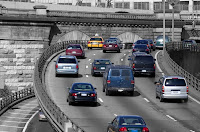
What is Aggressive Driving?
Before defining what aggressive driving is, let’s define what it is not. Although commonly used interchangeably, aggressive driving and road rage are not synonymous with each other. Road rage refers to a criminal offense or violent crime. For example, using a vehicle as a weapon and assaulting a driver are both examples of road rage.
New York State Police define an aggressive driver as a person who “Operates a motor vehicle in a selfish, bold or push manner, without regard for the rights or safety of other users of the streets and highways.” Using this definition makes it easier for people to distinguish between the two.
>Spotting an Aggressive Driver
If it seems that aggressive drivers are all over New York State, it is probably because they are. Instances of aggressive driving are increasing. The increase is typically associated with the overcrowding of roadways which leads to congestion which causes drivers’ frustration. To ensure safety on the roadways it is important to understand how to spot an aggressive driver. The following traffic violations are typically displayed by aggressive drivers:
- Speeding
- Frequent and/or Unsafe Lane Changing
- Failing to signal a lane change or turn
- Tailgating
- Failing to Yield to the driver with the Right of Way
- Running traffic lights
- Driving while impaired
- Remain Calm
- Maintain a Safe Distance
- Do not pass, unless it’s absolutely necessary
- Once it’s safe, change lanes and move out an aggressive drivers way
- If unable to change lines and being tailgated, maintain a safe speed and do not respond to any hostile gestures
- Observe common courtesy.
- Avoid actions that can provoke aggressive behaviors from other drivers.
- Reduce your stress level while driving.
- Keep your emotions in check.
- Before reacting, think about the possible reactions to your reactions.
>>Encountering an Aggressive Driver
After defining the difference between aggressive driving and road rage, the thought of sharing a roadway with an aggressive driver should be less frightening. However, it is still unsafe. Even thought aggressive drivers are not trying to physically harm you, they do not have any regard for the safety of other drivers. If (when) you encounter an aggressive driver, the New York State Police recommends the following basic tips:
>>>Avoiding Aggressive Drivers
Wouldn't it be great if there was a fool proof way to guarantee avoidance of aggressive drivers? Unfortunately, that is not possible. However, there are things drivers can do individually to reduce the likelihood of encountering an aggressive driver. The following tips and the will help drivers ensure their safety.
Adhering to the recommended driving tips listed above will help to avoid the frustration of dealing with an aggressive driver. However, it is important to remember that drivers who are unable to keep their emotions under control while driving are a greater risk to themselves than the people around them are.
Learn more about the Dangers of Aggressive Driving with a safety course from SafeDriver.com.
Additional Articles: Are you and Aggressive Driver?
Labels: aggressive driver, road rage
Posted by NSC - Traffic Safety
at
8:23 AM
0 Comments
Visit Us

Search
Loading
Categories
Recent Posts
- School Zone Safety
- Great...My Car Just Overheated!
- How Online Traffic School Will Save You Money
- The BOLT Driven to Distraction Infographic
- Study Shows Teens with Their Own Car Have More Cra...
- Snowmobile Safety
- Neighborhood Slow Zones
- Traffic Circles and Roundabouts
- Don’t Let the Grinch Steal Your Christmas
- Does Europes Relaxed Alcohol Attitude Lead To Fewe...
RSS Feeds





1.877.299.4564
NewYorkDefensiveDrivingNow.com
© 2010 NewYorkDefensiveDrivingNow. All Rights Reserved.